



Why October is the Critical Window for Winter Plumbing Prep
Before the first frost arrives, the most valuable tool you can have is a comprehensive seasonal home maintenance checklist. When the leaves begin to turn and the air grows crisp, it is incredibly tempting to focus entirely on indoor comforts. Many homeowners find that fall is a popular time for indoor projects like bathroom remodeling or a new shower installation. However, securing your home's exterior defenses must come first.
In our years serving the local community, our team at HRI Plumbing has seen firsthand how crucial timing is. Historical weather data shows that in Central Illinois, average low temperatures consistently drop into the 40s during October. This makes the October pre-winter window the perfect time to act before the first hard freeze catches you off guard. Proactive October maintenance prevents December emergencies, saving you from the stress and disruption of major water damage during the holiday season.
The Crucial Decision Point: DIY vs. Professional Care
The core challenge of fall preparation is knowing exactly where to draw the line between tasks you can safely handle yourself and tasks that require a licensed professional. A well-structured checklist removes the guesswork. It empowers you to tackle straightforward preventative steps—like securing garden hoses—while helping you recognize when structural modifications, such as upgrading outdoor spigots or insulating hidden pipes, require an expert's touch. Making these decisions early ensures your home is fully protected long before the severe cold sets in.
The Hidden Risks of Delaying Your Seasonal Home Maintenance
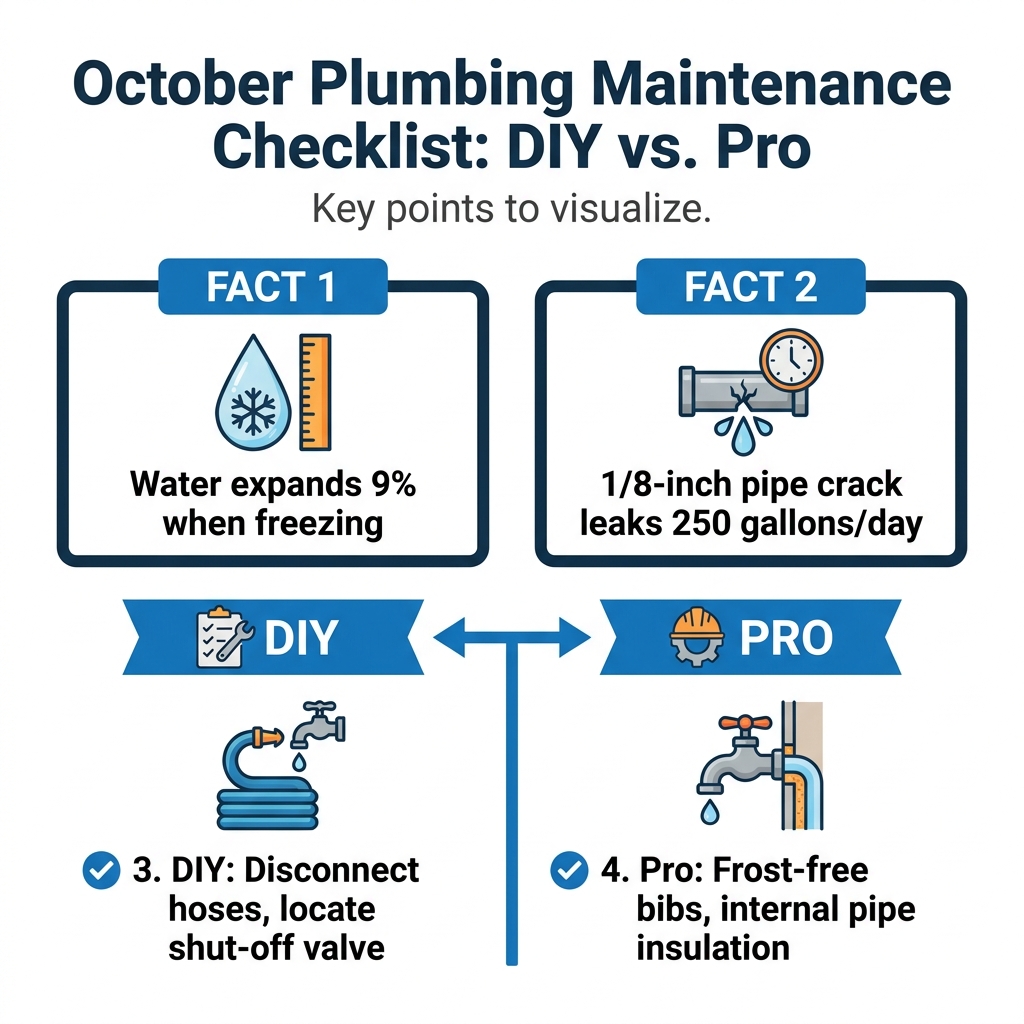
Ignoring or delaying your plumbing winterization carries severe consequences that go far beyond a temporary loss of water pressure. To understand the risks, it helps to look at the simple science of freezing pipes. When water turns to ice, it expands by approximately 9%. This expansion creates immense, unrelenting pressure inside your plumbing system. The pressure does not just build up where the ice block forms; it travels through the water trapped between the ice and the closed faucet, eventually causing the pipe to rupture at its weakest point.
The Devastating Impact of Minor Damage
Many homeowners underestimate how much damage a seemingly small pipe burst can cause. A crack as small as 1/8-inch can release up to 250 gallons of water into your home in a single day. In a matter of hours, this volume of water can ruin drywall, destroy flooring, compromise electrical systems, and create the perfect environment for aggressive mold growth. What begins as a minor oversight on a seasonal checklist quickly escalates into a major structural crisis.
A pattern we see often during our emergency service calls is that waiting until November to begin winterization increases the risk of being caught off-guard by early, unexpected temperature drops. Weather patterns can be unpredictable, and a sudden overnight freeze in late autumn can do just as much damage as a deep winter blizzard. For properties in Jacksonville IL, where older housing stock often features exposed crawlspaces or unheated basements, this risk is particularly high. Fortunately, these risks are entirely preventable when you follow a structured October checklist and address vulnerabilities before the freezing temperatures arrive.
Safe DIY Winterization: Disconnecting Hoses and Locating Shut-Offs
The foundation of any effective seasonal home maintenance checklist begins with the tasks you can safely and easily perform yourself. These do-it-yourself steps require no special tools or plumbing licenses, but they are absolutely essential for protecting your property during the October pre-winter transition.
Your Essential DIY Checklist
• Disconnect and drain all exterior garden hoses: Leaving a garden hose connected to an outdoor spigot is one of the most common causes of winter pipe bursts. Water trapped inside the hose will freeze, expand, and push back into the spigot and the pipes inside your walls. Disconnect all hoses, drain the residual water, and store them indoors for the winter.
• Locate and test the main water shut-off valve: In the event of a plumbing emergency, every second counts. You should know exactly where your home's main water shut-off valve is located and ensure it turns easily. If a pipe does freeze and burst, shutting off the water immediately will minimize the damage to your home.
• Clear debris from around exterior plumbing fixtures: Fallen leaves, dirt, and overgrown vegetation can trap moisture against your foundation and obscure your view of outdoor plumbing fixtures. Clearing this debris ensures you have maximum visibility to spot slow drips or early signs of rust before they become major issues.
• Inspect exposed pipes visually: Take a walk around your basement or utility room with a flashlight. Look for obvious signs of wear, condensation, or previous water stains on exposed pipes. While you should not attempt to repair these yourself, identifying them early allows you to call a professional for an assessment.
By completing these baseline tasks, you take control of your home's immediate safety and set the stage for any professional upgrades that might be necessary.
When to Call a Professional: Frost-Free Hose Bibs and Upgrades
While DIY tasks are crucial, they represent only half of the winterization equation. The boundary where DIY stops and professional plumbing intervention begins is often found right at the exterior walls of your home. A prime example is the protection of your outdoor spigots, commonly known as hose bibs.
Why Foam Covers Fall Short
Many homeowners rely on inexpensive foam covers purchased from hardware stores to protect their standard hose bibs. While these covers offer a marginal degree of insulation, they are often insufficient for the deep, sustained freezes typical of a Midwest winter. They merely trap existing ambient heat; they do not remove the water from the danger zone. If the temperature drops low enough for long enough, the water right inside the exterior wall will still freeze.
The Structural Advantage of Frost-Free Hose Bibs
We highly recommend the installation of a frost-free hose bib as the permanent solution to exterior pipe freezing. Unlike standard spigots, a frost-free bib features a long valve stem that extends deep into the heated interior of your home. When you turn off the water from the outside, the actual shut-off point is safely inside the warm wall, and the remaining water in the stem drains out completely. Because there is no water left in the exposed section of the pipe, there is nothing to freeze.
Installing these devices is not a DIY weekend project. It requires a licensed professional because the bib must be installed with a precise downward pitch. If the pitch is incorrect, water will remain trapped in the stem, defeating the purpose of the device and leading to a guaranteed rupture. Working with a professional ensures expertise in navigating local structural codes and plumbing requirements to ensure perfect drainage and leak-free performance. Having our technicians provide a professional assessment of your exterior plumbing integrity in Jacksonville IL provides the peace of mind that foam covers simply cannot match.
Assessing Hidden Vulnerabilities in Basements and Crawlspaces
The hidden problem: In our experience working on older housing stock throughout Jacksonville IL, we find that the most dangerous plumbing vulnerabilities are rarely out in the open. They are hidden beneath your floors in unheated basements, drafty crawlspaces, and poorly insulated exterior walls. Older housing stock is particularly susceptible to these hidden dangers, as original insulation degrades over decades and foundations settle, allowing freezing air to draft directly onto exposed water lines.
The underlying cause: When temperatures drop, the "stack effect" in a home can draw freezing air into lower crawlspaces while warm air rises to the upper floors. If the pipes running through these lower areas lack proper internal pipe insulation, the static water inside them can freeze rapidly overnight. Generic DIY checklists often miss these areas completely because they are difficult to access and require an expert eye to evaluate properly.
Professional Assessment and Solutions
The expert solution: A comprehensive winterization strategy must include a professional assessment of these hidden zones. Our team at HRI Plumbing brings the firsthand expertise needed to identify hidden vulnerabilities in local housing stock that generic DIY checklists overlook. We routinely check for compromised insulation, draft points, and degrading pipe materials.
In some cases, uncovering old, heavily degraded pipes during a winterization check might reveal that the system is beyond simple patching. If the structural integrity of the plumbing is compromised, we might recommend repiping during a remodel to secure the home for the long term. Having a professional evaluate these unseen areas ensures that your home is protected from the ground up, catching the silent threats before they turn into costly winter disasters.
Shifting Focus Indoors: Planning Winter Upgrades Safely
Once your exterior is fully secured against the freeze and your hidden vulnerabilities are addressed, you can safely shift your focus to indoor comfort. The icy Central Illinois winters often keep residents indoors much longer, heightening the need for a home environment that is both safe and luxurious. Winter is actually an excellent time to plan comprehensive indoor upgrades, provided the core plumbing infrastructure has already been winterized.
Winter Remodeling and Accessibility
During the October pre-winter period, homeowners frequently begin planning larger projects to enhance their daily routines. For instance, bathroom remodeling in Springfield and surrounding areas is highly popular during the colder months. Upgrading your indoor spaces requires careful consideration of both aesthetics and underlying plumbing safety.
If you are considering accessibility upgrades, comparing roll-in showers vs. walk-in tubs is a critical step. Both options require significant adjustments to your home's water lines and drainage systems. A professional plumber ensures that all new plumbing meets rigorous winter safety standards, ensuring that pipes routed through newly remodeled walls remain fully insulated and protected from exterior drafts. Consulting a professional for these indoor upgrades ensures you achieve the perfect balance of exterior safety and interior luxury.
Your Complete October Plumbing Maintenance Checklist Summary
To help you organize your fall preparation, we have synthesized the core tasks into a quick-reference guide. This table clearly delineates the boundary between the tasks you should handle this weekend and the tasks you should schedule with a professional in Jacksonville IL before the end of October.
• Disconnecting and draining garden hoses — Who Should Handle It: Homeowner (DIY) — Why It Matters: Prevents water from freezing and backing up into exterior walls.
• Locating the main water shut-off valve — Who Should Handle It: Homeowner (DIY) — Why It Matters: Ensures a rapid response to minimize damage during a plumbing emergency.
• Clearing debris from exterior fixtures — Who Should Handle It: Homeowner (DIY) — Why It Matters: Provides clear visibility to spot leaks and prevents moisture buildup.
• Installing frost-free hose bibs — Who Should Handle It: Licensed Professional — Why It Matters: Requires precise downward pitching to ensure complete drainage and prevent freezing.
• Insulating pipes in crawlspaces — Who Should Handle It: Licensed Professional — Why It Matters: Requires expert assessment of drafts and hidden vulnerabilities in older homes.
• Assessing overall plumbing integrity — Who Should Handle It: Licensed Professional — Why It Matters: Identifies degrading materials that may require repiping before winter stress hits.

Frequently Asked Questions About Fall Plumbing Preparation
What should be on a fall home maintenance checklist?
A comprehensive checklist should focus heavily on preventative plumbing care before the freeze. Key items include disconnecting garden hoses, insulating exposed pipes in unheated areas, and checking the operation of sump pumps. It is also the ideal time to schedule a professional inspection of your water heater and hidden plumbing lines to ensure they are ready for the winter workload.
How do I prepare my outside faucets for winter?
The first step is to remove all attached hoses, drain residual water, and store them indoors. Next, shut off the interior supply valve leading to the outside faucet if your home is equipped with one, and leave the outside valve open to let any remaining water expand safely. For long-term protection, consider having a professional upgrade your standard spigots to frost-free bibs.
When should I winterize my house plumbing?
October is the ideal month in the Midwest to complete your winterization tasks to avoid early November freezes. Waiting too long exposes your home to unpredictable cold snaps that can cause severe damage before you have had a chance to prepare. Completing your checklist before Halloween ensures you are fully protected.
At what temperature do pipes freeze?
Pipes are generally at risk when outside temperatures drop below 20 degrees Fahrenheit, but wind chill and lack of insulation can cause freezing at higher temperatures. Pipes located in unheated interior spaces, such as basements, attics, and garages, are particularly vulnerable even when exterior temperatures hover slightly above 20 degrees. Proper insulation is key to changing this threshold.
Can I install a frost-free hose bib myself?
Because it involves structural modifications and precise pitching to ensure drainage, it requires a licensed professional. If a frost-free bib is installed completely level or tilted slightly backward, water will remain trapped inside the stem and freeze, completely defeating the purpose of the device. Professional installation guarantees structural integrity and leak-free performance.
Secure Your Home Before the First Freeze Hits
Completing your seasonal home maintenance checklist provides unparalleled peace of mind as the harsh Midwest winter approaches. Knowing exactly which tasks you have handled and which vulnerabilities have been secured by an expert allows you to enjoy the changing seasons without the looming dread of a plumbing emergency. Do not wait until the first hard freeze in Jacksonville IL to discover a hidden weakness in your crawlspace or an unprotected exterior spigot. Take action now to secure your property. Schedule an expert plumbing inspection today to handle the professional tasks on your list, ensuring your home remains safe, warm, and entirely leak-free all winter long.


