



The Hidden Risks of Ignoring Fall Plumbing Maintenance
Your outdoor faucet might look perfectly fine right now, but skipping essential home maintenance tips and troubleshooting this fall could mean a hidden disaster is brewing just behind your exterior wall. When the weather begins to turn, many homeowners focus solely on indoor chores, completely missing the most vulnerable part of their property: the outdoor plumbing. October pre-winter / fall maintenance is the absolute most critical window for protecting your home's water supply lines from the harsh weather that is just around the corner.
In our region, late October or early November typically brings the first hard frost, setting a firm seasonal deadline for winterization. At HRI Plumbing, our team has seen firsthand how failing to properly isolate and drain your outdoor hose bibs before that first freezing night hits is one of the most common—and most destructive—mistakes a homeowner can make. Taking proactive steps right now provides incredible peace of mind. Before you dive into planning winter indoor projects like bathroom remodeling services or scheduling a new shower installation, your outdoor plumbing must take priority to ensure those indoor upgrades stay safe and dry.
Understanding the Mechanics: Why Pipes Burst in Winter
To understand why fall preparation is so important, you have to look at the exact physics of freezing water. The problem isn't just that water gets cold; it is what water does when it changes state. If you live in Jacksonville IL and surrounding Central Illinois areas, your plumbing system faces severe temperature drops that test the physical limits of building materials.
The Pressure Cooker Effect Inside Your Pipes
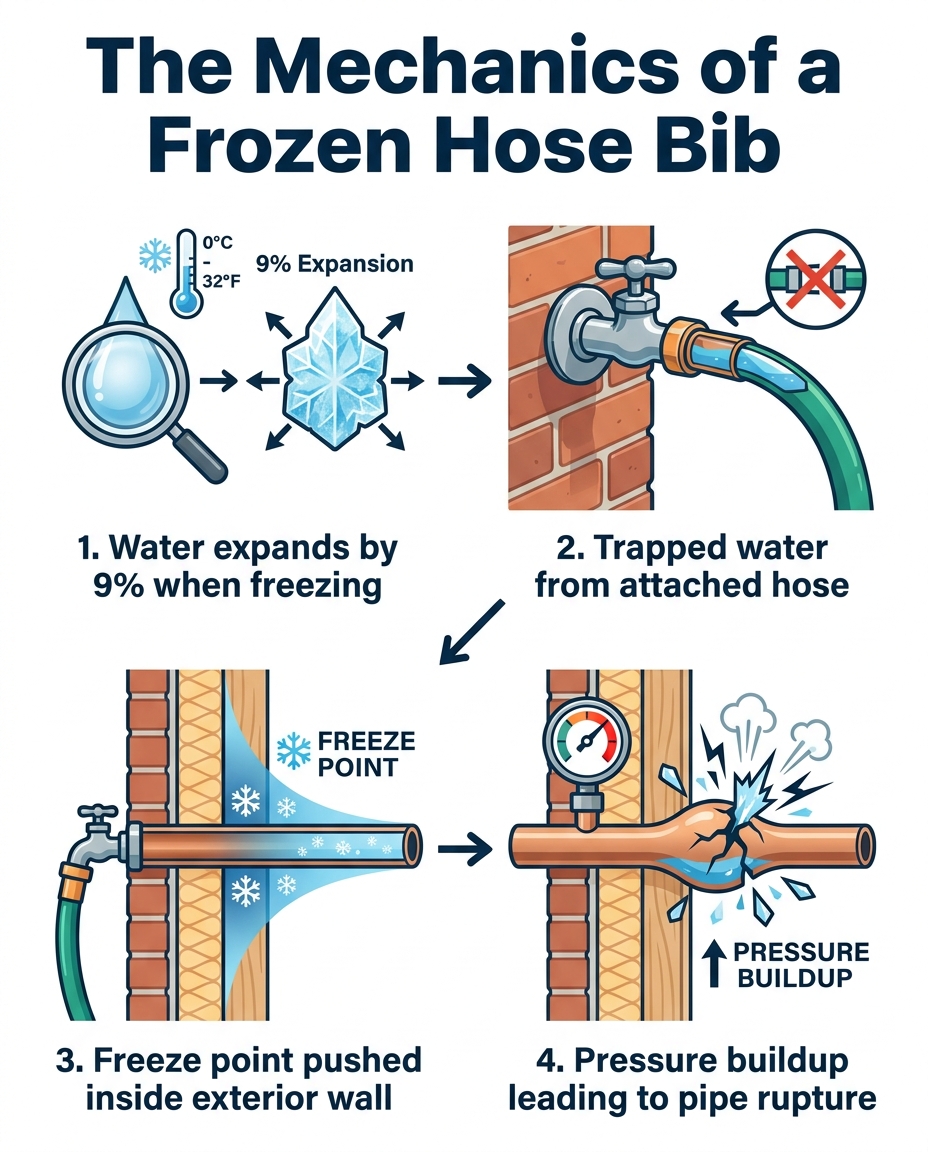
When water drops below 32 degrees Fahrenheit and turns to ice, it expands by approximately 9% in volume. While 9% might not sound like a massive increase, inside an enclosed, rigid plumbing pipe, it creates an immense amount of pressure. This expansion pushes against the remaining liquid water trapped inside the line.
Here is a common pattern our plumbing experts at HRI Plumbing see every winter: homeowners assume that the ice itself pushes outward and splits the pipe at the exact spot where the freezing occurs. In reality, the ice block acts like a piston. As it expands, it pushes the unfrozen water down the line toward a closed faucet or valve. Because water cannot be compressed, the pressure inside the pipe skyrockets to thousands of pounds per square inch. This extreme hydraulic pressure is what causes durable plumbing materials—whether they are rigid copper, modern PEX, or PVC—to rupture.
Where the Rupture Actually Happens
Because of this pressure buildup, the actual burst often happens between the ice blockage and the closed faucet, rather than right at the freeze point. This means a freeze that starts near an exterior wall can cause a pipe to burst several feet away, deep inside a ceiling or interior wall cavity. Understanding this problem→cause→solution flow makes it clear why keeping cold air away from your pipes in the first place is the only true solution to preventing a winter disaster.
The Danger of the Attached Garden Hose
Perhaps the single biggest threat to your home's plumbing during October pre-winter / fall maintenance is a garden hose left attached to an outdoor spigot. It seems like a harmless oversight, but it physically disables the safety mechanisms built into modern plumbing.
How Frost-Free Hose Bibs Work (And Fail)
Most modern homes are equipped with frost-free hose bibs. Unlike older spigots where the shut-off valve sits right on the exterior wall, a frost-free bib features a long metal stem. When you turn the handle on the outside, it actually shuts off the water flow deep inside the warm interior of your house, usually 8 to 12 inches back. Once the water is shut off, the remaining water in the stem is designed to simply drain out onto the ground, leaving the exterior portion of the pipe completely empty and safe from freezing.
The fatal flaw: If you leave a garden hose connected to the spigot, that remaining water cannot drain out. The hose traps the water inside the long metal stem of the frost-free bib. When the temperature drops, the trapped water freezes solid.
The Hidden Ice Blockage
Because the water is trapped, the freezing point is pushed backward from the exterior spigot directly into the warmer exterior wall cavity of your home. The resulting hidden ice blockages cause ruptures inside the home's structure. You won't even know it happened during the winter because the water in the pipe is frozen solid. The true disaster strikes when the weather warms up, the ice thaws, and full water pressure is restored to a pipe that has been split open inside your walls, leading to severe water damage.

Safe DIY Fall Plumbing Maintenance Steps
Taking control of your October pre-winter / fall maintenance doesn't require a plumbing license, provided you stick to safe, preventative measures. Homeowners can prevent the vast majority of winter water damage by following a strict isolation protocol before the freezing weather arrives. Here is a reliable checklist of safe preventative steps you should take right now:
1. Disconnect, drain, and store all garden hoses: This is the most vital step. Unscrew every hose from every exterior spigot. Drain the water out of them completely by walking them hand-over-hand, then store them in a garage or shed to prevent the rubber or vinyl from cracking in the cold.
2. Locate and close interior shut-off valves: If your home is equipped with dedicated interior shut-off valves for your outdoor faucets (often found in basements, utility rooms, or crawlspaces), turn them to the closed position. This cuts off the water supply before it even reaches the exterior wall.
3. Open the exterior spigot to drain trapped water: After closing the interior valve, go back outside and open the spigot. Leave it in the open position throughout the winter. This allows any residual water to drain out and gives any remaining moisture room to expand if it happens to freeze.
4. Inspect exterior walls for visible gaps: Walk the perimeter of your home and look closely at the areas where plumbing pipes penetrate the exterior walls. If you see daylight or feel a draft, seal those gaps with weather-resistant caulk or expanding foam to keep freezing winds out of your wall cavities.
5. Evaluate the need for professional updates: If you notice leaking valves, heavily corroded pipes, or spigots that refuse to turn, fall is the time to act. Consider scheduling broader residential plumbing updates before the emergency season officially begins.
Protecting Older Homes from Freezing Drafts
While modern construction utilizes tight building envelopes and advanced insulation, older homes require a different approach. Historic and older homes often have vastly different subfloor and exterior wall insulation profiles, making them uniquely vulnerable to rapid temperature drops.
Navigating Historic Structural Realities
Working with properties in Jacksonville IL and surrounding Central Illinois areas requires deep local expertise. At HRI Plumbing, our technicians routinely navigate the structural realities and building codes of older Morgan County homes. Many of these historic properties feature stone foundations, unsealed crawlspaces, or unheated basements with exposed plumbing lines running directly along drafty rim joists. When harsh winter winds whip against the side of the house, freezing drafts can easily penetrate these unsealed areas.
Identifying Vulnerable Draft Zones
The danger in older homes isn't just the ambient temperature; it is the wind chill factor hitting exposed pipes. A pipe sitting in a 35-degree basement might seem safe, but if a sub-freezing draft blows directly onto a copper elbow joint through a gap in the foundation, that specific section of pipe can freeze solid in a matter of hours.
• Rim Joists — Common Issue in Older Homes: Lack of modern insulation allows freezing winds to blow directly onto perimeter pipes. — Preventative Action: Inspect visually and block active drafts with appropriate insulation material.
• Crawlspaces — Common Issue in Older Homes: Unsealed vents or damaged access doors let ambient freezing air pool under the floors. — Preventative Action: Ensure crawlspace doors close tightly and consider insulating exposed pipes.
• Unheated Basements — Common Issue in Older Homes: Drafty, single-pane basement windows create localized freezing zones near water meters. — Preventative Action: Check window seals and eliminate direct airflow onto plumbing fixtures.
Our team highly recommends performing basic visual inspections of all unheated spaces where plumbing is present. Addressing these structural realities before the deep freeze sets in is a critical component of winterizing an older property.
Transitioning to Indoor Maintenance and Winter Upgrades
Once your outdoor plumbing is completely secure and isolated, fall is the perfect time to evaluate your indoor fixtures. October pre-winter / fall maintenance isn't just about playing defense against the cold; it is also about ensuring the daily functionality of your home remains uninterrupted.
Testing Your Indoor Shut-Off Valves
A well-maintained home balances both preventative care and functional improvements. One of the most overlooked indoor maintenance tasks is checking the localized shut-off valves under your sinks and behind your toilets. Over time, hard water deposits can cause these valves to seize up. If a pipe ever does freeze or a fixture suddenly leaks during the winter, you need to know that these valves will turn easily by hand. Gently turn them off and back on to ensure they move freely. If they are completely stuck, do not force them with a wrench, as this can break the valve and cause an immediate flood.
Planning Functional Winter Improvements
Winter is a very common time for homeowners to plan larger interior accessibility upgrades, as outdoor projects are put on hold. If you are considering modernizing a bathroom for better mobility or aging-in-place, the colder months are an ideal time to start comparing roll-in showers and walk-in tubs. Evaluating your structural needs now ensures that any major plumbing shifts required for these upgrades can be planned thoughtfully rather than rushed.
Troubleshooting: When to Call a Licensed Professional
There is a strict line between safe DIY preventative maintenance and situations that require a licensed professional. If you live in Jacksonville IL and surrounding Central Illinois areas, knowing exactly when to step back and call for help can save your home from catastrophic damage.
Signs of a Frozen Pipe
If you missed a step in your fall maintenance, you might wake up one morning to find that a pipe has frozen. Recognizing the symptoms early is crucial. Look for these warning signs:
• A localized drop in water pressure: If you turn on a faucet and only a trickle comes out, or nothing at all, while other faucets work fine, the line supplying that specific fixture is likely frozen.
• Visible frost on exposed indoor pipes: Check the pipes under your sinks or in your basement. If you see white frost forming on the outside of the copper or PEX, there is a solid ice block inside.
• Strange odors from drains: If a drain line freezes, sewer gases may be unable to vent properly, pushing unpleasant smells back into your living space.
• Bulging or distorted pipes: If a pipe looks swollen or warped, the immense pressure of expanding ice has permanently damaged the material, and a rupture is imminent.
The Dangers of DIY Thawing
As licensed professionals, our team at HRI Plumbing must warn strongly against using open flames, blowtorches, or high-heat devices to thaw pipes. This poses severe safety risks, including carbon monoxide buildup and extreme fire hazards, especially when working near dry wooden framing in older homes. Furthermore, applying rapid, intense heat to a frozen pipe can cause the water inside to boil, creating steam pressure that violently bursts the pipe.
If a pipe is frozen or a main shut-off valve is completely seized, a licensed professional has the proper equipment to safely resolve the issue. Professionals use specialized, controlled pipe-thawing machines and have the expertise to safely cut and replace damaged sections without violating building codes. Attempting complex plumbing repairs without proper licensing almost always leads to worse damage and potential code violations.
Secure Your Home's Plumbing Before the First Hard Freeze
The short answer to winter plumbing safety is preparation. Early action during your October pre-winter / fall maintenance prevents the vast majority of winter plumbing disasters. By understanding the mechanics of why pipes burst and taking the time to disconnect hoses, isolate spigots, and seal drafts, you take control over your home's safety and longevity.
Understanding these safe preventative steps ensures you won't be caught off guard when the temperatures plummet. If you need help locating your main shut-off valves, replacing a seized interior valve, or thoroughly winterizing your systems, reach out to our local plumbing experts at HRI Plumbing today. Securing your home now means you can enjoy the winter season with total confidence.
Frequently Asked Questions
How do I winterize my outside faucets?
The most critical step is disconnecting all garden hoses. Once hoses are removed, locate the interior shut-off valve for the faucet, turn it off, and then open the outside spigot to allow any remaining trapped water to drain out completely.
What happens if you leave a hose attached in winter?
Leaving a hose attached traps water inside the spigot assembly, preventing the frost-free mechanism from draining. When temperatures drop, this trapped water freezes and expands, pushing the freezing point deep into your exterior wall and causing the pipe to rupture inside your home.
What is a good fall home maintenance schedule?
A good schedule prioritizes outdoor tasks before the first hard freeze. In October, you should focus on disconnecting hoses, sealing exterior wall drafts, checking indoor shut-off valves, and scheduling any necessary professional inspections before emergency winter weather arrives.
How do you troubleshoot a frozen pipe?
First, identify the frozen section by checking for localized water pressure drops or visible frost on exposed lines. Never use open flames or high heat to thaw it; instead, leave the faucet open to relieve pressure and contact a licensed professional to safely thaw the line and assess for hidden damage.
When is the best time to disconnect outdoor hoses in Central Illinois?
October is the ideal time to disconnect and store your outdoor hoses. Because the first hard freezing temperatures typically hit the region in late October or early November, completing this task early ensures you are never caught off guard by a sudden overnight freeze.


