



Protecting Your Plumbing Before the First Sudden Fall Freeze
When the temperature suddenly drops and your basement system starts making a strange humming noise without moving any water, you need reliable home maintenance tips and troubleshooting strategies fast. Especially in regions prone to rapid weather shifts, waiting for a freeze warning to broadcast on the local news is often too late. By the time the alert sounds, the damage to exposed pipes and exterior fixtures may have already begun. Identifying these vulnerable systems in October is the most important decision point for homeowners right now.
The transition from mild autumn weather to freezing conditions happens rapidly, particularly in areas like Jacksonville, IL. In our years of providing plumbing services across the region, our team at HRI Plumbing has seen firsthand how these rapid fall cold snaps catch homeowners off guard. One day you are raking leaves in a light jacket, and the next, overnight temperatures plunge, leaving uninsulated pipes completely exposed. Taking action during the mid-fall pre-winterization window ensures you are not caught off guard when the frost settles in.
This guide will walk you through safe, preventative measures you can take to protect your property, while clearly outlining when it is time to call in professional plumbing services. By understanding the mechanics of how freezing temperatures affect your home's water lines, you can prevent minor issues from escalating into major water damage.
The Physics of Pipe Freezing and Sump Pump Failures
The problem: Many homeowners assume that as long as their home is heated, their plumbing is safe. However, exterior fixtures, crawlspace pipes, and sump pump discharge lines are fully exposed to the elements. When the temperature drops below the 32°F hard freeze threshold, these components are at immediate risk of freezing solid.
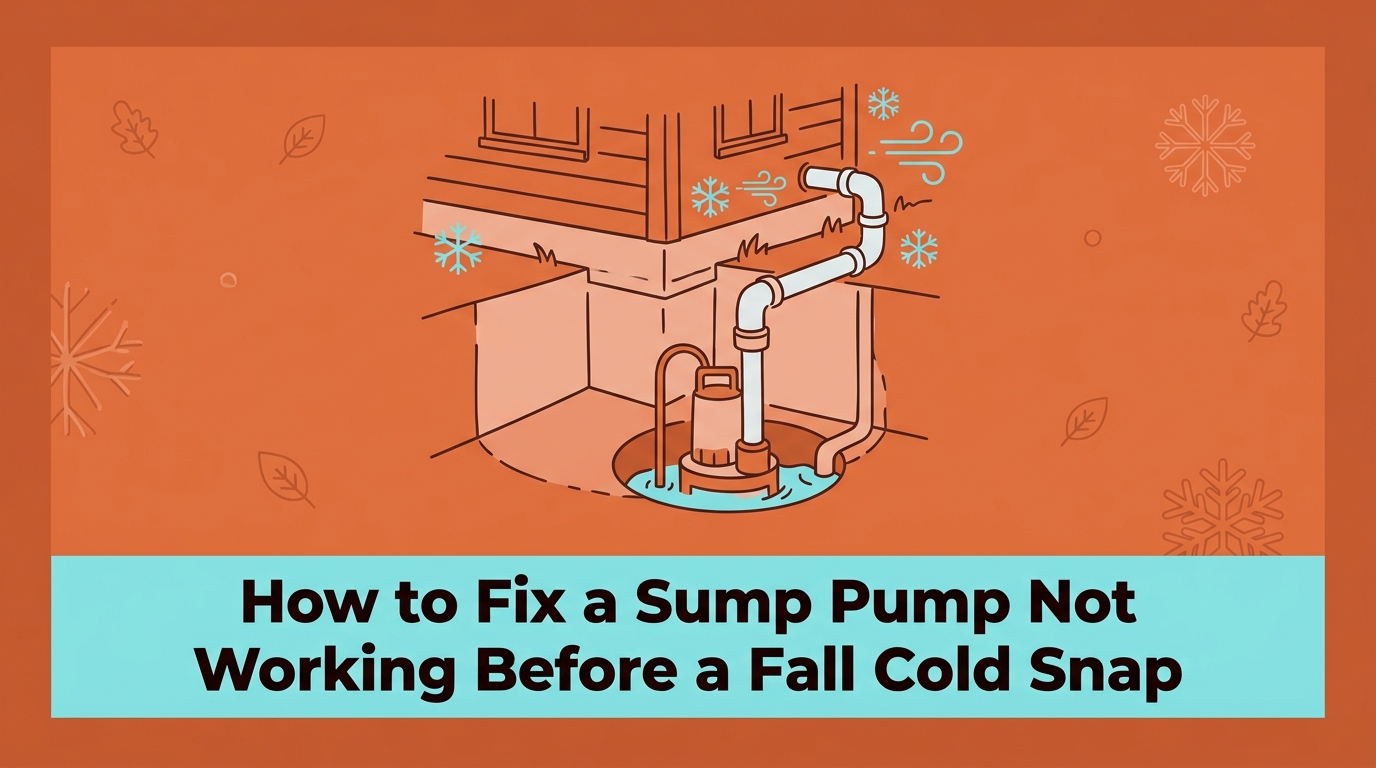
The cause: The core issue lies in simple physics. When water freezes, it expands by approximately 9%. This expansion exerts immense pressure on whatever container is holding it—whether that is a copper pipe, a PVC discharge line, or a brass hose bib. Uninsulated pipes simply cannot withstand this outward force. In a sump pump system, the discharge line carries water from the basement out into the yard. If the end of this line freezes, it creates a solid block of ice that traps the remaining water inside the pipe.
The solution: Proactive insulation and drainage are the only reliable defenses. Our technicians always recommend taking action well before a freeze warning is issued; waiting is almost always too late to safely disconnect and drain these systems. Once the ice begins to form, the pressure is already building, and attempting to force the system to operate can cause catastrophic failure.
How Backpressure Damages the Pump Motor
When a sump pump attempts to push water through a frozen discharge line, it faces an immovable object. This creates severe backpressure on the system. The mechanics of a sump pump are designed to move water freely; when that flow is blocked, the motor continues to run, working harder and harder to push the water out.
This extreme strain leads to several compounding issues:
• Overheating: Sump pump motors rely on the flow of cool water to regulate their temperature. Without water movement, the motor rapidly overheats.
• Impeller damage: The spinning mechanism (impeller) that drives the water can warp or break under the stress of pushing against a solid column of trapped water.
• Electrical burnout: The continuous draw of high electricity to force the motor to turn eventually burns out the internal wiring, requiring a complete replacement of the unit.
Signs of an overworked motor: If you hear a loud humming or buzzing noise coming from your sump pit, but the water level is not dropping, your pump is likely fighting against a frozen line. Rapid cycling—where the pump turns on and off every few seconds without moving water—is another clear indicator that backpressure is compromising the system.
• Exterior Hose Bib — Impact of Freezing Temperatures: Trapped water expands by 9% inside the brass fitting. — Resulting Damage: Cracked fixture and potential interior wall leaks.
• Discharge Line — Impact of Freezing Temperatures: Exit point freezes solid, blocking all outgoing water. — Resulting Damage: Severe backpressure applied directly to the pump.
• Pump Motor — Impact of Freezing Temperatures: Forced to run continuously against a blocked line. — Resulting Damage: Overheating, electrical burnout, and total failure.
Step-by-Step: How to Fix a Sump Pump Not Working Due to Frozen Lines
When our phones ring off the hook during the first hard freeze, it is usually because a sump pump has stopped working. If you discover your system is failing during a cold snap, methodical troubleshooting is required. Diagnosing the exact point of failure prevents you from causing further damage to the unit. Follow these steps to safely address a sump pump failure connected to cold weather and frozen discharge lines.
1. Verify the power supply: Before assuming the line is frozen, check the basics. Ensure the pump is plugged in and that the GFCI outlet has not tripped. Cold weather often brings power fluctuations. Check your main electrical panel for any tripped breakers.
2. Test the float switch: The float switch dictates when the pump turns on. If the pit itself is located in an unheated area, the surface water may have formed a thin layer of ice, trapping the switch. Gently lift the float switch to see if the motor engages. If you are unsure about this mechanism, learning why your sump pump won't turn on automatically can help you rule out mechanical switch failures.
3. Inspect the discharge pipe exit: Walk outside and locate where the sump pump expels water into your yard. If this exit point is buried under snow, blocked by frozen leaves, or visibly filled with ice, you have found the source of the backpressure.
4. Disconnect the interior line (if equipped): Many modern sump pump systems feature a freeze gap or a threaded union near the interior wall. If your pump is actively running and cannot push water outside, temporarily disconnect this union so the water can drain back into the pit or a secondary drain, immediately relieving the pressure on the motor.
Safe Thawing Techniques for Exterior Lines
If you have identified a frozen exterior discharge line, you must thaw it safely. Applying extreme heat to cold pipes—especially PVC—is highly dangerous and can cause the material to shatter instantly.
• Use ambient heat: The safest method is to apply warm, damp towels directly to the frozen section of the exposed pipe. Replace the towels as they cool down.
• Safe space heater placement: You can place a portable space heater near the exposed pipe, provided it is kept at a safe distance (at least three feet away) and monitored constantly. Never leave a space heater unattended outdoors or near standing water.
• Strict warnings: Never use open flames, blowtorches, or heat guns on PVC plumbing lines. Never pour boiling water over a frozen pipe, as the sudden thermal shock will crack the plastic and require extensive repairs.
If the line is fully blocked deep underground, or if the pump motor has already burned out and fails to turn on after the line is cleared, all DIY methods must stop. At this stage, professional intervention is required to replace the damaged components safely.
Securing Crawlspace Pipes and Sump Pump Discharge Routes
The crawlspace is one of the most common zones for hidden pipe freezes. Unlike a basement, which benefits from the ambient heat of the home's interior, a crawlspace is often poorly insulated and highly susceptible to outside temperature fluctuations. When temperatures drop below the 32°F hard freeze threshold, the uninsulated plumbing lines running through this space are at extreme risk.
Insulating exposed lines: The most effective defense is adding proper insulation to all exposed plumbing lines and discharge pipes in the crawlspace. Foam pipe sleeves are an excellent starting point. These sleeves wrap around the pipe and provide a thermal barrier. For extreme climates, thermostatically controlled heat tape can be applied beneath the foam insulation. This tape automatically activates when the temperature nears freezing, providing a gentle heat source that prevents the 9% expansion of freezing water.
Clearing drainage pathways: Your sump pump relies on gravity to move water away from the foundation once it exits the discharge line. During the mid-fall pre-winterization period, autumn debris such as leaves, twigs, and mud can easily accumulate at the end of the discharge route. If water pools at the exit because of this debris, it will freeze much faster, creating an ice plug that backs up directly into the pipe.
Professional assessment: It is vital to ensure that the entire discharge route is clear before the freeze sets in. If your discharge line connects to an underground drainage system that appears sluggish or backed up, investing in professional drain cleaning services is a wise preventative measure. Clearing out roots, mud, and seasonal debris ensures that when your sump pump pushes water out during a winter thaw, the water has a clear, unobstructed path away from your home.
Disconnecting Exterior Plumbing: The October Timeline
A pattern we see often at HRI Plumbing is severe interior water damage caused by a single forgotten garden hose. Focusing on the critical preventative maintenance of exterior hose bibs and plumbing fixtures is a task that cannot be delayed. The October timeline is critical because it falls squarely in the mid-fall pre-winterization window, allowing you to secure your home before the first unexpected freeze.
When a garden hose is left connected to an exterior faucet, it prevents the water inside the bib from draining properly. The hose acts as a thermal bridge, trapping water right at the connection point. When the temperature drops, the water inside the hose freezes first. As the ice expands, it travels backward, pushing up into the faucet and eventually into the pipes located inside your walls. This expanding ice pressure will easily split a brass valve or burst a copper pipe.
Your October Preventative Checklist:
• Disconnect all hoses: Walk the entire perimeter of your home and physically unscrew every garden hose from its spigot.
• Drain residual water: Stretch the hoses out on a downward slope to allow all trapped water to drain completely before rolling them up.
• Store hoses indoors: Move the drained hoses into a garage, shed, or basement to prevent the rubber or vinyl from cracking in the winter cold.
• Inspect the bib for leaks: Once the hose is off, check the faucet for any persistent drips. A dripping faucet means the internal washer has failed, and that slow drip will form a dangerous icicle that can damage the fixture.
• Install insulated covers: Place a foam insulated faucet cover over every exterior bib. Ensure the cover is pulled tight against the exterior wall to create a sealed pocket of dead air, which acts as a powerful insulator against freezing winds.


When DIY Troubleshooting Fails: Addressing Internal Shut-Off Valves
While preventative maintenance and basic thawing techniques are safe for homeowners to tackle, there are strict limits to DIY repair. Knowing when to step back and call a professional is just as important as knowing how to insulate a pipe. When dealing with the 32°F hard freeze threshold, the line between a minor inconvenience and a major plumbing disaster is incredibly thin.
Identifying severe failures: If you notice water pooling inside your home, hear a persistent hissing sound coming from inside a wall, or see a sudden, unexplained spike in your water meter reading, you likely have a burst pipe or a failed internal shut-off valve. Similarly, if your sump pump motor is completely unresponsive after you have verified the power and cleared the discharge line, the internal electrical components have likely burned out.
The limits of DIY: Explicitly speaking, replacing burst pipes inside walls, swapping out faulty main shut-off valves, or rebuilding burned-out sump pump motors requires a licensed professional. Attempting to cut and solder wet copper pipes or wire high-voltage pump systems without proper training often leads to severe water damage, electrical hazards, and building code violations.
Mitigating damage: While waiting for help to arrive, your immediate priority is mitigation. Every homeowner must know exactly where their main water shut-off valve is located. This valve is typically found in the basement, crawlspace, or utility closet near where the main water line enters the foundation. Turning this valve clockwise will cut off the water supply to the entire house, stopping a burst pipe from flooding your living space.
Having a reliable partner is essential when temperatures plummet and systems fail. Our team's readiness to provide fast, reliable emergency plumbing in Jacksonville ensures that when DIY fixes aren't enough, you have local experts available to intervene, secure your home, and restore your critical plumbing systems quickly and safely.
Frequently Asked Questions About Cold Weather Sump Pump Failures
Why is my sump pump not working in the cold?
A sump pump failure in cold weather is often due to a frozen discharge line creating severe backpressure on the system. When the exterior line freezes solid, the pump cannot push water out of the pit, causing the motor to overwork and eventually overheat. Additionally, if the pump is located in an unheated basement or crawlspace, the float switch itself may become frozen in place, preventing the unit from turning on.
How do I keep my sump pump discharge line from freezing?
To keep the discharge line from freezing, ensure the exterior pipe has a proper downward slope so that water drains completely after each cycle, leaving no standing water inside to freeze. You should also insulate any exposed sections of the pipe above ground using weather-resistant foam insulation. Finally, consider adding a freeze gap attachment near the foundation wall, which allows water to overflow safely outside if the main line becomes blocked by ice.
At what temperature do exterior pipes freeze?
Pipes are generally at high risk of freezing when the outside temperature drops below the 32°F hard freeze threshold, but the danger becomes critical around 20°F. However, factors like severe wind chill, poor wall insulation, and the pipe's location (such as an unvented crawlspace) can cause exterior fixtures to freeze much closer to the 32°F mark. Proactive insulation is necessary long before the deepest winter temperatures arrive.
How do you winterize a crawl space?
Winterizing a crawl space begins with sealing any drafts and closing off open foundation vents that allow freezing air to circulate directly over your plumbing. Next, insulate all exposed water lines and sump pump discharge pipes with high-quality foam sleeves to provide a thermal barrier. Finally, ensure the ground vapor barrier is intact to reduce freezing moisture buildup, which can negatively impact both your pipes and your home's structural supports.
When should I disconnect my outside hoses?
You should always disconnect your outside hoses well before the first hard freeze of the season. In regions with rapid fall temperature drops, this ideally means completing the task during the mid-fall pre-winterization window in mid-to-late October. Leaving a hose connected traps water inside the fixture, which will freeze, expand, and push back into the home's interior plumbing, causing pipes to burst.
Ensure Your Plumbing is Ready for the Winter Freeze
Taking the time to complete your mid-fall pre-winterization tasks is the most effective way to protect your home from the damaging effects of freezing temperatures. By disconnecting hoses, insulating crawlspace pipes, and ensuring your sump pump discharge lines are clear, you significantly reduce the risk of catastrophic water damage. Understanding how vulnerable your pipes are to the 9% expansion of freezing water is the crucial first step to safeguarding your property.
However, if you have gone through these home maintenance tips and troubleshooting steps and still feel unsure about your system's readiness, or if your pump is already showing signs of failure, do not wait for the situation to worsen. We encourage you to seek a professional assessment to verify that your home is fully protected. For expert guidance, system evaluations, and reliable sump pump repair and replacement, reaching out to a licensed professional ensures your home remains safe, dry, and secure all winter long.


