



What to Do When Your Water Heater Is Leaking From the Bottom
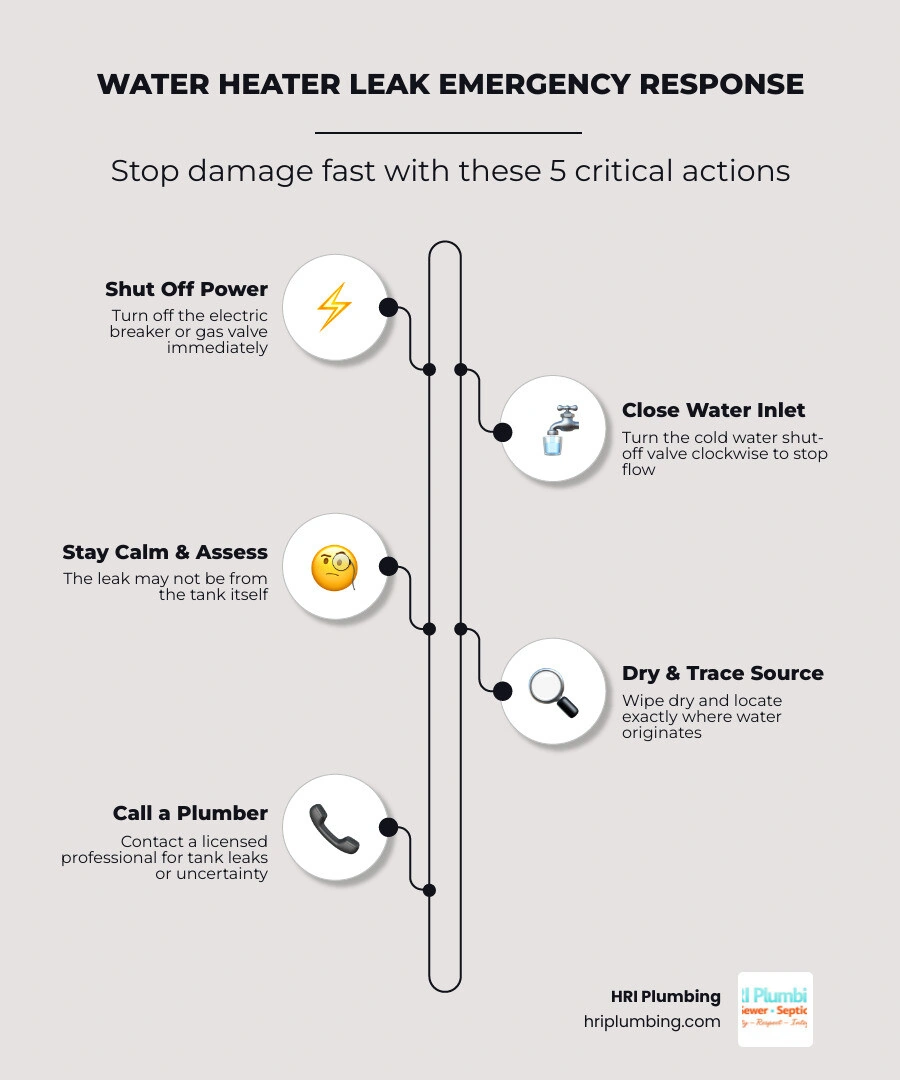
If you're dealing with a water heater leaking from the bottom, what to do right now comes down to five quick steps:
- Turn off the power or gas to the water heater immediately.
- Shut off the cold water inlet valve (turn it clockwise).
- Don't panic yet — the leak may not be from the tank itself.
- Dry the area and trace where the water is actually coming from.
- Call a licensed plumber if the tank body is leaking or you're unsure of the source.
Finding a puddle under your water heater is one of those moments that stops you cold. Roughly 14,000 U.S. homeowners face a water leak disaster every single day — and a failing water heater is one of the most common culprits. Left unchecked, even a slow drip can lead to flooded floors, mold growth within 24 to 72 hours, and costly structural damage.
The good news? Not every bottom leak means your tank is done for. Some causes — like a loose drain valve or a misfiring T&P relief valve — are straightforward fixes. Others, like internal tank corrosion, mean it's time for a full replacement.
This guide walks you through exactly what to do, step by step.
Water heater leaking from the bottom what to do terms made easy:
Water Heater Leaking from the Bottom What to Do to Stop Water Damage
When you find a growing puddle at the base of your appliance, your primary goal is containment. A standard residential water heater holds 40 to 50 gallons of pressurized hot water, but because it is constantly connected to your home’s main water supply, it won’t stop leaking once those 50 gallons run out. It will keep leaking indefinitely until you intervene.
With the global water heater market projected to grow from $23.7 billion in 2023 to over $32.1 billion by 2029, manufacturers are designing more efficient units, but even the best systems can succumb to pressure and age. Taking immediate action is the only way to safeguard your basement or utility room from a major water disaster.

How to Safely Shut Off Power and Water Supplies
Before you touch any plumbing connections, you must secure the system's energy source. Mixing water and electricity is a recipe for disaster, and leaving a gas burner active on an empty tank can crack the unit. If you are actively Addressing Water Heater Leaking Issues, follow these steps to safely shut down the system:
- Disconnect the Energy Source:
- For Electric Water Heaters: Locate your home’s main circuit breaker panel and switch off the dedicated breaker for the water heater.
- For Gas Water Heaters: Locate the gas control valve on the side of the tank and turn the dial to the "OFF" position. You can also close the dedicated gas shut-off valve on the incoming gas pipe.
- Shut Off the Water Supply:
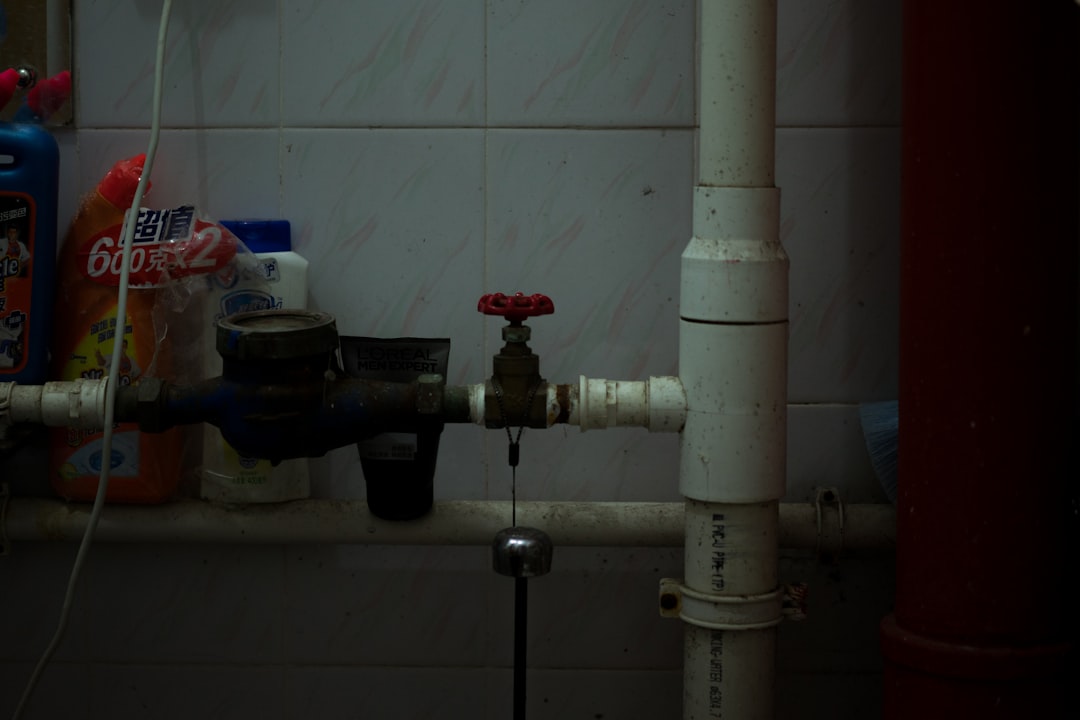
- Locate the cold water inlet valve near the top of the tank. This is typically a gate valve (which you turn clockwise to close) or a ball valve (which you turn 90 degrees so the handle is perpendicular to the pipe).
- If this valve is stuck or leaking itself, turn off your home’s main water shut-off valve.
- Drain the Tank (If the Leak Is Severe):
- If water is actively flooding your floor, attach a standard garden hose to the drain valve at the bottom of the tank.
- Run the other end of the hose to a floor drain, sump pump, or outside. Open a hot water faucet upstairs to break the vacuum, then open the drain valve to let gravity empty the tank.
Is It a Real Leak or Just Condensation?
Sometimes, what looks like a terminal tank failure is actually a perfectly normal physical reaction. When cold water fills an empty tank—especially on hot, humid summer days in Illinois—condensation can form on the exterior of the steel jacket.
On gas water heaters, the combustion process also creates condensation that can drip down and pool at the base. To rule this out, thoroughly wipe down the tank and the floor with a towel. Keep the unit off and check back in an hour. If the area remains dry until the water heater heats up again, you may just be dealing with heavy condensation. If water immediately starts pooling on the dry floor, you have an active leak.
Water Heater Leaking from the Bottom What to Do to Trace the Source
Because of gravity, water always travels downward. A puddle at the bottom of your tank doesn't automatically mean the bottom of the tank is broken. Water from a loose connection at the very top of the unit can easily run down the sides, hide behind the outer metal jacket, and pool at the base.
If you are dealing with a Water Heater Leaking in Springfield, IL, grab a flashlight and a dry paper towel to trace the path of the water:
- Top Connections: Check the hot and cold water inlet and outlet pipes. If the paper towel gets wet when you wipe these fittings, the leak is originating from the top and migrating downward.
- The T&P (Temperature and Pressure) Relief Valve: This critical safety valve is located on the top or side of the tank. It is designed to open and discharge water if the internal pressure or temperature gets too high. If the discharge tube attached to this valve is wet, the valve is either doing its job to prevent an explosion, or the valve itself has failed.
- The Drain Valve: Located near the bottom of the tank, this plastic or brass valve is used for flushing sediment. If water is dripping directly from the valve nozzle or around its threads, the issue is isolated to this component.
- The Bottom Seam: If the top connections, T&P valve, and drain valve are completely dry, but water is seeping directly out of the bottom jacket seams, the internal glass lining of your tank has likely fractured, causing a terminal tank leak.
Repair vs. Replacement: Resolving Your Water Heater Issues
Once you have identified the true source of the water, you can make an informed decision on whether to repair the unit or replace it entirely.
Water Heater Leaking from the Bottom What to Do About Sediment and Corrosion
Understanding why water heaters leak from the bottom helps prevent future disasters. Most traditional tanks are made of steel with a glass-like inner lining to protect against rust. However, hard water minerals naturally settle to the bottom of the tank over time.
This sediment accumulation creates an insulating layer. On gas units, this forces the burner to run longer and hotter to heat the water, causing extreme thermal stress that eventually cracks the glass lining. On electric units, sediment can bury the lower heating element, causing it to burn out.
To combat this, manufacturers install a sacrificial anode rod. This rod attracts corrosive elements in the water, sacrificing itself so the steel tank doesn't rust. Once the anode rod is completely depleted (usually within 3 to 5 years), those corrosive elements attack the steel tank walls, leading to pinhole leaks and eventual structural failure.
If you want to avoid these Common Water Heater Issues That Require Repair, routine maintenance—such as flushing the tank annually and replacing the anode rod—is essential.
When Can You Repair vs. When Must You Replace?
When deciding Should I Repair or Replace My Water Heater?, the general rule of thumb depends on where the leak is located and the age of the unit.
If the leak is coming from a component, it is usually repairable:
- Drain Valve: A leaking plastic drain valve can easily be replaced with a heavy-duty brass valve. Sometimes, simply tightening a loose valve a quarter-turn with a wrench will stop a minor drip.
- T&P Valve: If the T&P valve is weeping due to age or mineral buildup, a plumber can replace it quickly.
- Loose Fittings: Tightening or replacing the supply line connections at the top of the tank is a straightforward fix.
However, if the steel tank shell itself is corroded and leaking from the bottom seams, it cannot be repaired. Welding or patching a pressurized water tank is highly unsafe and will not hold.
Signs That Your Water Heater Must Be Replaced:
- The water leaking from the bottom is rust-colored or muddy.
- The tank is more than 8 to 12 years old (the average lifespan of a standard tank).
- You hear loud popping or rumbling noises when the burner is on, indicating heavy, hardened sediment buildup.
- The leak is coming directly from the metal seams of the tank jacket.
| Issue | Can It Be Repaired? | Standard Solution |
|---|---|---|
| Leaking Supply Lines | Yes | Tighten or replace fittings |
| Dripping T&P Valve | Yes | Replace the valve |
| Leaking Drain Valve | Yes | Tighten or replace with a brass valve |
| Cracked Tank Shell / Seam Leak | No | Full water heater replacement |
Why Professional Plumbing Services Are Essential for Springfield, IL Homeowners
While a loose fitting might seem like a tempting weekend DIY project, dealing with gas lines, high-voltage electrical circuits, and pressurized hot water is inherently risky. A improperly installed T&P valve, for example, can cause a tank to over-pressurize and rupture catastrophically.
Additionally, unchecked water damage can quickly foster toxic mold growth, creating health hazards for your family. That is why professional intervention is always the safest and most reliable path forward.
If you need a professional assessment, HRI Plumbing is proud to serve homeowners in Jacksonville, Springfield, and Rushville, IL. We provide reliable plumbing solutions with 24/7 emergency support, ensuring your home is protected from water damage around the clock. Whether you need a simple valve repair or a brand-new, energy-efficient water heater installation, our experienced team is here to help with honesty and integrity.
If your tank is dripping or you want to schedule a preventive flush to extend its life, check out our HRI Plumbing Water Heater Repair & Replacement Services today to keep the hot water flowing safely in your home.


