



Why Knowing the Things You Should Never Put Down a Drain Can Save Your Plumbing
The things you should never put down a drain might surprise you — many of them are everyday household items most people dispose of without a second thought. But what goes down your sink or toilet doesn't just disappear. It travels through your home's pipes, into the sewer system, and can cause serious damage along the way.
Here's a quick overview of the most common drain offenders:
| Item | Why It's a Problem |
|---|---|
| Grease, fats, and oils | Solidify in pipes and cause blockages |
| Coffee grounds | Accumulate like sediment and clog pipes |
| Eggshells | Create rough surfaces that trap other debris |
| Pasta and rice | Expand in water and block pipes |
| Fibrous foods | Wrap around disposal blades and clog pipes |
| Flushable wipes | Don't break down and form hard clogs |
| Paper towels | Absorb water and swell, causing blockages |
| Feminine hygiene products | Don't dissolve and cause serious backups |
| Medications | Contaminate water supplies and harm ecosystems |
| Paint, solvents, and bleach | Corrode pipes and pollute waterways |
Fats, oils, and grease alone are estimated to cause 47% of clogged drains in the U.S. — and that's just one category of problem items. The damage from improper drain disposal can range from a slow-draining sink to a full sewer overflow, both of which are costly and disruptive to deal with.
For homeowners in Springfield, Jacksonville, and Rushville, IL, a preventable clog can quickly turn into an expensive emergency. Understanding what to keep out of your drains is one of the simplest ways to protect your plumbing system and avoid an unexpected repair call.
For more tips on keeping your pipes clear, check out our guide on how to prevent clogged drains at home.
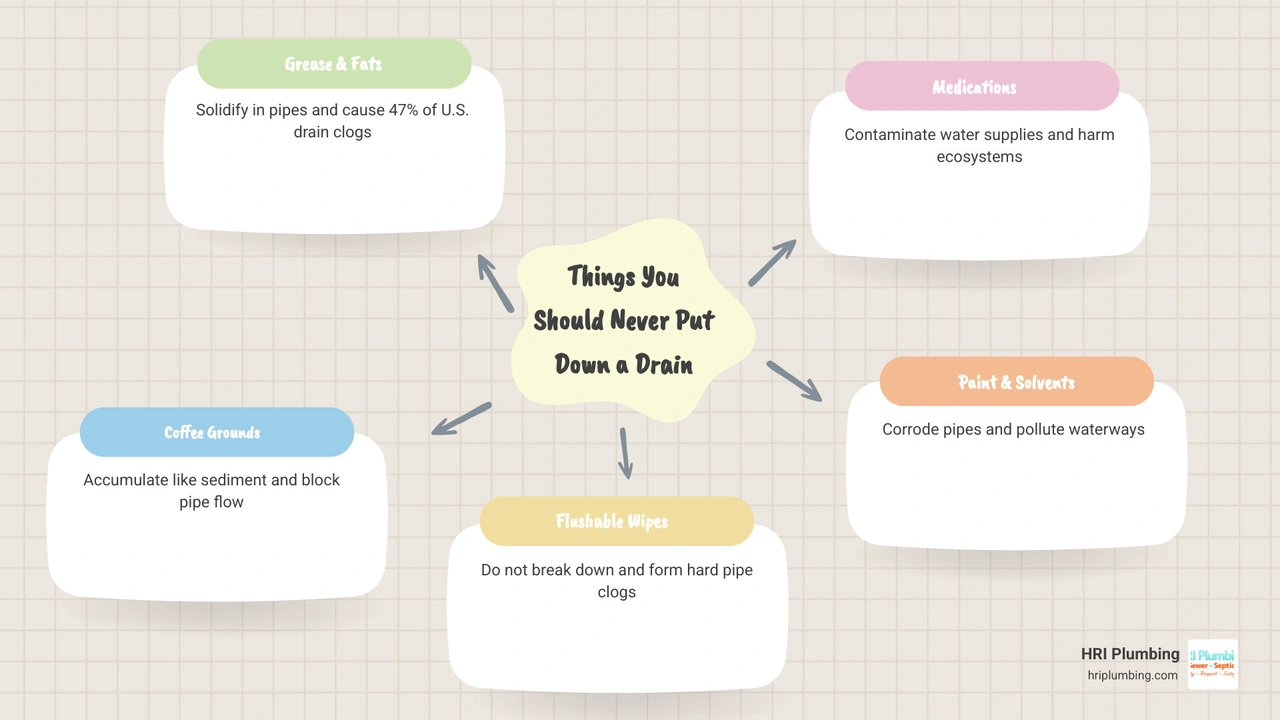
Key things you should never put down a drain vocabulary:
10 Things You Should Never Put Down a Drain
When we are rushing to clean up after dinner or tidying up the bathroom, it is incredibly tempting to take shortcuts. However, treating your household drains like a trash can is a recipe for a plumbing disaster.
Your plumbing system is built to handle water, organic human waste, and easily degradable toilet paper. When foreign objects make their way down the pipe, they restrict water flow, build up over time, and can eventually lead to major pipe blockages. If you are on a septic system, these items can disrupt the delicate bacterial balance in your tank, leading to premature failure and costly repairs.
By understanding what is safe for your plumbing, you can protect your home and avoid messy backups. To keep your pipes running smoothly, you can help prevent clogged drains by being mindful of what you put down them. If things are already running a bit slow, it might be time to ask yourself: do your drains need to be cleaned?
Let’s dive deep into the specific items that should never cross your drain's threshold.
Kitchen Grease and Other Things You Should Never Put Down a Drain

Cooking oils, butter, lard, bacon grease, and organic fats are the leading causes of residential sewer overflows in the United States. When you pour warm, liquid grease down the kitchen sink, it seems harmless. But as soon as it hits the cool, dark environment of your underground pipes, it quickly cools and solidifies.
As the grease hardens, it clings to the inner lining of your pipes, acting like a sticky glue. Every other tiny food particle or hair that passes by gets trapped in this greasy sludge. Over time, this buildup chokes off the water flow entirely. On a larger municipal scale, this congealed fat combines with other non-biodegradable items to create massive "fatbergs" that can block city sewer mains.
Dairy products like milk, cream, and cheese also contain high amounts of fats and proteins that congeal inside your pipes, creating similar blockages. To make matters worse, decaying grease and rotting dairy emit a highly unpleasant odor. If you want to avoid having foul smelling drains in your home, always scrape your grease into a disposable container, let it harden, and throw it in the trash.
Food Scraps and Coffee Grounds
Many homeowners assume that if they have a garbage disposal, any food scrap is fair game. In reality, garbage disposals are designed for light food residue, not bulk waste disposal. Some of the worst kitchen offenders include:
- Coffee Grounds: Coffee grounds do not dissolve in water. Instead, they settle in the lowest bends of your pipes (like the P-trap), clumping together to form a thick, sediment-like barrier that acts like wet sand.
- Eggshells: Despite the old myth that eggshells sharpen disposal blades, they actually create a massive hazard. The shells grind down into tiny, sand-like granules, while the sticky inner membrane wraps around the disposal's mechanical parts and catches other debris inside the pipe.
- Fibrous Foods: Celery, corn husks, onion skins, and asparagus have long, stringy fibers that can easily wrap around your garbage disposal's impellers, causing the motor to jam and burn out.
- Pasta and Rice: These starches expand significantly when exposed to water, even after they have been cooked. When ground up, they turn into a sticky, glue-like paste that easily blocks water flow.
- Potato Peels: Potato peels are packed with starch. When put through a disposal, they grind down into a thick, sticky paste that acts like cement inside your drainpipes.
| Food Type | Behavior in Water | Best Disposal Method |
|---|---|---|
| Coffee Grounds | Settles like heavy sediment | Trash or garden compost |
| Eggshells | Grinds into abrasive sand | Trash or garden compost |
| Pasta & Rice | Swells and expands | Trash or compost bin |
| Potato Peels | Turns into sticky, thick paste | Trash or compost bin |
To prevent these common kitchen sink clogs, we highly recommend keeping a compost bin nearby or scraping your plates directly into the trash before washing. only certain things should go down the garbage disposal. If you are already struggling with a slow kitchen sink, you might be dealing with some of the hidden causes behind kitchen sink clogs.
Bathroom Hazards and Flushable Wipes
The bathroom is another frequent site for severe plumbing blockages. The most common culprit in recent years is the "flushable" wipe. Despite what the packaging claims, flushable wipes do not break down in water the way standard toilet paper does. While toilet paper disintegrates in seconds, wipes can remain fully intact for hours, days, or even weeks, getting caught on pipe joints and creating stubborn blockages.
Other paper products, such as paper towels, facial tissues, and napkins, are designed to absorb water and expand. Flushing them down the toilet will quickly restrict your pipes. Feminine hygiene products (like tampons and pads) are specifically engineered to absorb maximum moisture and swell up, making them one of the absolute worst things to flush.
Additionally, we must be mindful of hair. Hair is incredibly strong and naturally catches on the rough surfaces inside your drainpipes. As it tangles with soap scum and grease, it forms a tight, net-like barrier that chokes your drains. Using a simple drain strainer in your shower is an easy, proactive way to catch hair before it sneaks down the pipe.
Chemical Pollutants and Medications
Your drains are a direct pathway to our local environment, water systems, and local watersheds. Pouring hazardous chemicals down the drain can cause severe damage to your home’s plumbing, septic systems, and municipal water treatment facilities.
- Medications: Flushing expired or unused pills down the toilet allows active pharmaceutical compounds to enter the water supply. Standard water treatment facilities are not designed to filter out these chemical compounds, meaning they can eventually contaminate our local rivers, streams, and drinking water, harming aquatic life.
- Paint and Solvents: Latex paint, oil-based paint, and paint thinners should never go down the drain. As paint dries inside your pipes, it can form a hard, rubbery layer that slowly chokes off the water flow. Solvents and thinners can also corrode plastic pipes and release toxic fumes.
- Bleach and Harsh Chemical Cleaners: While bleach is commonly used for cleaning, pouring large, undiluted amounts down the drain can corrode your metal pipes. If you are on a septic system, bleach and chemical drain openers will kill the beneficial bacteria that break down waste, leading to septic failure.
For safe disposal, look into local hazardous waste collection days in your area, or use pharmacy take-back programs to safely discard old medications.
Household Items and Other Things You Should Never Put Down a Drain
There are a few other seemingly harmless household items that can wreak havoc on your plumbing system:
- Produce Stickers: Those tiny plastic stickers on your fruits and vegetables do not dissolve in water. If washed down the sink, they can stick to the inner walls of your pipes, catching other debris. If they make it past your home, they can bypass water treatment filters and end up polluting local waterways.
- Kitty Litter: Even litter labeled as "flushable" should never be put down a toilet. Cat litter is designed to absorb moisture and clump together. When introduced to your pipes, it swells up and forms a heavy, cement-like block that is incredibly difficult to clear.
- Bones and Hard Scraps: Chicken bones, beef bones, and hard fruit pits will easily dent or break your garbage disposal's impellers and can lodge themselves deep within your drain line.
If you are currently dealing with slow-moving water or standing water in your kitchen, you may be experiencing common kitchen sink drain issues. Fortunately, we have several reliable strategies for solving kitchen sink drainage issues before they cause a major household flood.
Professional Drain Cleaning Services in Springfield, Jacksonville, and Rushville
When a stubborn clog strikes, skip the harsh, corrosive chemical drain cleaners that can eat away at your plumbing. Instead, turn to the trusted team at HRI Plumbing. We provide reliable, high-quality residential and commercial plumbing solutions throughout Jacksonville, Springfield, and Rushville, IL.
Our team specializes in fast, professional drain cleaning, sewer repair, leak detection, and comprehensive plumbing maintenance plans. Whether you have a minor kitchen sink backup or need emergency assistance with a clogged sewer line, we offer 24/7 support, affordable rates, and flexible options to fit your schedule and budget. We approach every job with the honesty, integrity, and quality workmanship our local communities deserve.
If you are searching for a reliable clogged drain near me or need a professional plumber for clogged drains, we are here to help. Contact us today to schedule your service or learn more about our comprehensive HRI Plumbing Drain Cleaning services!


