




Why Getting the Right Water Heater Size Matters for Your Home
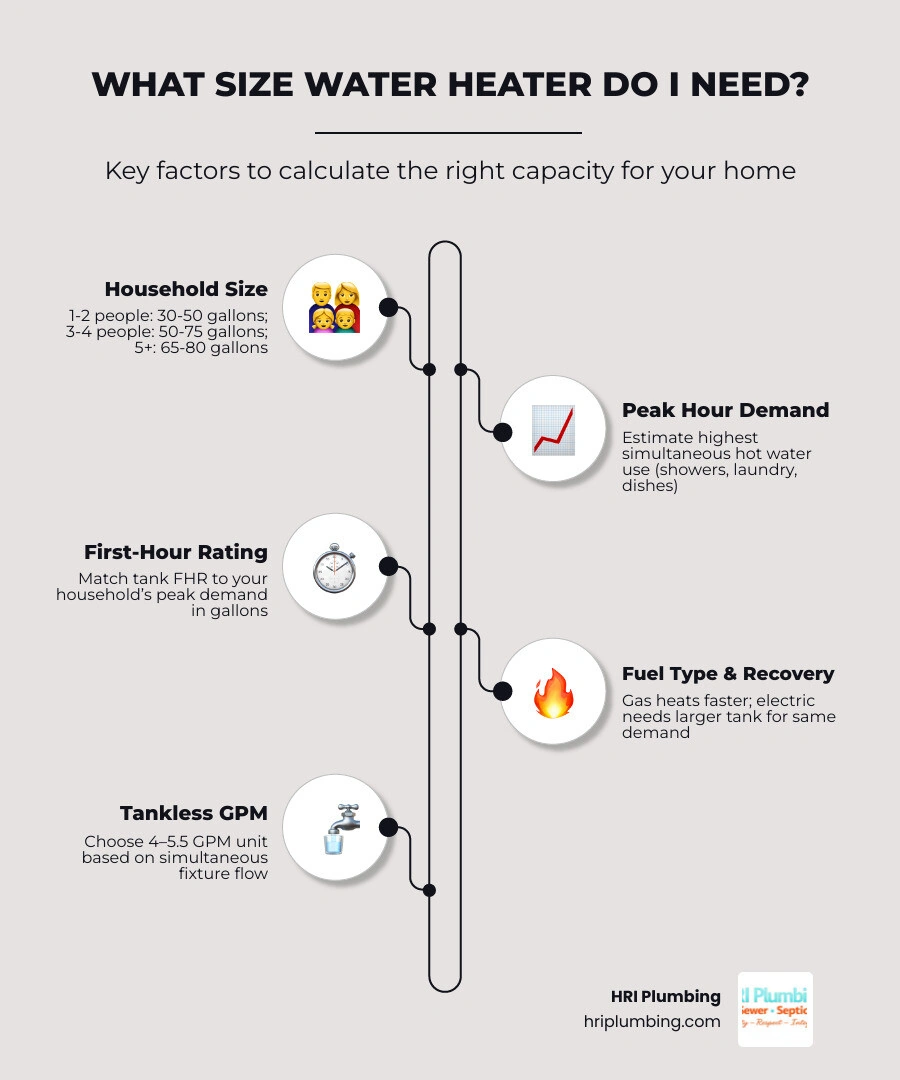
Figuring out what size water heater do I need is one of the most important decisions you'll make when replacing or upgrading your home's hot water system. Pick too small, and you're stuck with cold showers halfway through the morning rush. Pick too large, and you're paying to heat water you'll never use — every single day.
Here's a quick answer based on household size:
| Household Size | Recommended Tank Size (Gas) | Recommended Tank Size (Electric) |
|---|---|---|
| 1-2 people | 30-40 gallons | 40-50 gallons |
| 2-3 people | 40-50 gallons | 50-60 gallons |
| 3-4 people | 50 gallons | 65-75 gallons |
| 5+ people | 65-75 gallons | 75-80 gallons |
For tankless water heaters, the key number isn't gallons — it's flow rate in gallons per minute (GPM). Most families of 2-4 need between 4.0 and 5.5 GPM from a tankless unit.
These are starting points. Your actual needs depend on more than just how many people live in your home. Water usage habits, the number of bathrooms, your fuel type, and even where you live in Illinois all play a role.
Heating water accounts for roughly 18% of a household's energy use, so getting this right isn't just about comfort — it affects your energy bills month after month. And if your current unit is already struggling to keep up, it may be telling you something: check out our guide on Signs That It's Time to Replace Your Water Heater or How Long Does a Water Heater Last to know where you stand.
In this guide, we'll walk you through how to calculate the right water heater size for your home — whether you're looking at a traditional storage tank, a tankless unit, or a heat pump model.
Easy what size water heater do i need glossary:
- how to choose the right water heater
- tankless vs tank water heater for your home
- gas vs electric water heater which is better
Sizing Storage Tanks: What Size Water Heater Do I Need for My Household?
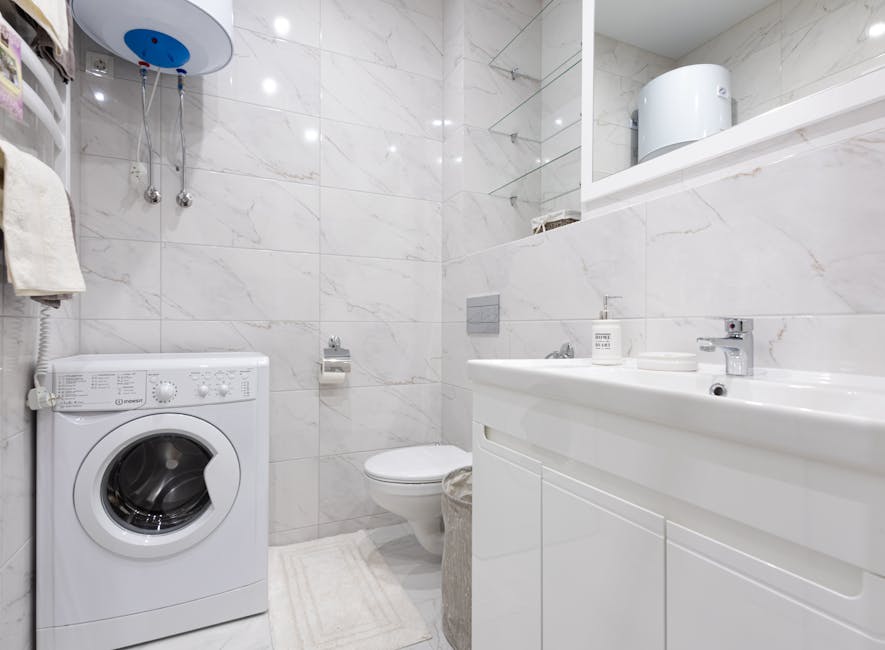
When sizing a traditional storage tank water heater, the physical capacity of the tank is your starting point. Storage tanks keep a set volume of water constantly heated and ready for use. If you run through that volume faster than the heater can replenish it, you will experience a sudden drop in water temperature.
For homeowners looking to replace an old tank, matching your household size to the right storage capacity is critical. While a single occupant in a small apartment might get by with a 30-gallon tank, a family of four typically uses 100 gallons or more of hot water per day. However, this does not mean you need a 100-gallon tank. Because your water heater continuously reheats water throughout the day, a 40-gallon to 50-gallon tank is usually sufficient for a typical family of four.
If you live in Central Illinois and need local guidance on replacing your tank, our localized resources can help. Take a look at our Water Heater Replacement Guide Jacksonville IL or our Water Heater Replacement Guide Rushville IL to understand how we approach installations in your specific neighborhood.
Calculating Peak Hour Demand and First-Hour Rating
To get a truly accurate measurement of your household's needs, we must look past basic tank capacity and calculate your peak hour demand. This is the single hour of the day when your household uses the most hot water. For most families, this is the morning rush when multiple people shower, get ready for work or school, and run the dishwasher.
To calculate your peak hour demand, use these average hot water estimates:
- Shower: 20 gallons
- Shaving: 2 gallons
- Hand dishwashing: 4 gallons
- Automatic dishwasher: 7 gallons
- Washing machine (hot load): 20 to 30 gallons
For example, if two people take back-to-back showers (40 gallons) while the dishwasher is running (7 gallons) and someone shaves (2 gallons) within the same hour, your peak hour demand is 49 gallons.
Once you know this number, you must match it to a water heater's First-Hour Rating (FHR). The FHR is a certified metric found on the top-left corner of the unit’s yellow EnergyGuide label. It measures how many gallons of hot water the heater can supply in a single hour, starting with a fully heated tank. You should choose a water heater with an FHR that is within 2 to 3 gallons of your calculated peak hour demand. If you are debating whether your current system is worth fixing or if you should upgrade to a model with a better FHR, read our guide on How to Decide Between Water Heater Repair and Replacement.
Determining What Size Water Heater Do I Need Based on Fuel Type
The fuel type you use—whether natural gas, propane, or electricity—has a massive impact on how your water heater performs. This is due to the recovery rate, which is the speed at which a water heater can heat cold water back up to your target temperature after the hot water has been depleted.
Natural gas water heaters have a significantly higher recovery rate than standard electric resistance models. A typical gas burner can heat 40 to 50 gallons of water per hour, whereas an electric resistance element usually only manages 20 to 25 gallons per hour.
Because electric tanks recover roughly half as fast as gas units, electric systems must rely on larger storage volumes to deliver the same FHR. If you are replacing a gas water heater with an electric model, you will likely need to upsize your tank by 20% to 30% to avoid running out of hot water during busy mornings. For a deeper dive into how these power sources compare, check out our article on Gas vs Electric Water Heater Which is Better.
Sizing Tankless Systems and Professional Installation in Illinois
If you are tired of running out of hot water, a tankless system is an excellent alternative. Unlike storage tanks, tankless units heat water on demand and are sized by flow rate in Gallons Per Minute (GPM).
To find out if this technology is right for your home, read our Tankless Water Heaters Complete Guide to learn about the installation requirements and physical footprint of these systems.
Flow Rate and Temperature Rise: What Size Water Heater Do I Need for Tankless?
To size a tankless water heater, calculate your required GPM and temperature rise.
First, determine your maximum simultaneous GPM by adding the flow rates of all fixtures you expect to run at once:
- Low-flow showerhead: 1.5 to 2.0 GPM
- Standard showerhead: 2.5 GPM
- Bathroom or kitchen faucet: 1.0 to 1.5 GPM
- Washing machine or dishwasher: 2.0 GPM
If you want to run two standard showers (5.0 GPM) and a kitchen faucet (1.5 GPM) simultaneously, you need at least 6.5 GPM.
Second, calculate the temperature rise—the difference between incoming groundwater temperature and your desired output (usually 120°F). In Central Illinois, winter groundwater can drop to 40°F, requiring an 80°F rise.
Because heating colder water requires more energy, GPM capacity drops in colder climates. A unit delivering 7.0 GPM in the south might only deliver 4.5 GPM during a Springfield winter. Always size using winter GPM specifications. To see if the energy savings justify the switch, explore our article on Do Tankless Water Heaters Save Money Over Time.
Choosing Between Tank, Tankless, and Heat Pump Options
Here is a breakdown of the differences between storage tanks, tankless systems, and heat pump (hybrid) water heaters:
| Feature | Storage Tank Water Heater | Tankless Water Heater | Heat Pump (Hybrid) Water Heater |
|---|---|---|---|
| Lifespan | 8-12 years | 20+ years | 10-15 years |
| Sizing Metric | First-Hour Rating (FHR) | Gallons Per Minute (GPM) | First-Hour Rating (FHR) |
| Recovery Speed | Moderate (Gas) to Slow (Electric) | Instantaneous | Slower (uses hybrid backup elements) |
| Space Required | High (takes up floor space) | Very Low (wall-mounted) | High (needs 750+ cubic feet of air) |
| Energy Efficiency | Standard | High (heats only on demand) | Extremely High (2-4x more efficient) |
Heat pump water heaters move heat from the surrounding air into the tank, making them highly efficient for electric homes. To explore how they work, read Energy Efficient Water Heater Options Explained. If you are torn between a traditional and on-demand unit, check out our Tankless vs Tank Water Heater Guide 2026.
Professional Water Heater Services in Jacksonville, Springfield, and Rushville
Sizing a water heater involves navigating groundwater temperatures, electrical capacities, gas lines, and usage patterns. Mistakes can lead to lukewarm showers or high utility bills.
At HRI Plumbing, we provide professional installation, maintenance, and emergency services. Whether you need a Springfield water heater repair, a tankless conversion in Jacksonville, or assistance in Rushville, our technicians are here to help. We ensure your home has a reliable supply of hot water year-round.
Ready to find the perfect system? Contact us today at HRI Plumbing Water Heater Repair and Replacement Services to schedule a consultation with our local experts.


